


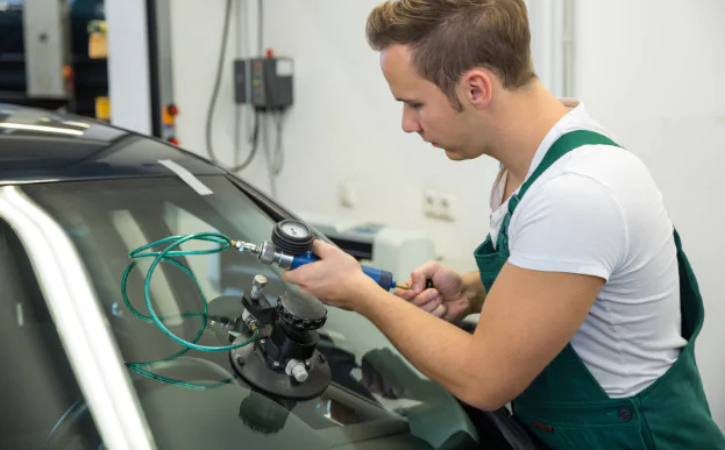
You’re driving along, a stone flicks up off the road, and there’s a sharp tick against the glass. At the next stoplight you take a closer look and there it is: a little chip, barely bigger than a match head. It doesn’t block your view, the glass feels solid, and part of you wants to just leave it be.
Here’s the reality. A small chip doesn’t mean you’re headed for a new windshield, and not every chip is a ticking clock. But “small” isn’t the same as “nothing.” Whether a chip can wait, needs repair, or turns into a bigger problem comes down to the kind of damage it is, where it sits, and whether it’s already started to run. A quick look from someone who does this daily tends to settle things faster than guessing ever will.
What a Chip Really Is?
A windshield isn’t one solid pane. It’s two layers of glass with a tough plastic film sandwiched between them, which is what stops the glass from shattering into your lap on impact. When something strikes hard enough, the outer layer takes the hit and you’re left with a pit or a small starred mark where the energy landed.
The tricky part is that the dot you can see isn’t always the whole injury. Tiny fractures often spread out from the impact point in ways that are hard to notice unless you catch them in the right light. Two chips that look identical from the driver’s seat can behave very differently once you understand what’s going on beneath the surface.
How a Small Chip Can Spread
A chip is a weakened spot in glass that’s already under tension, so plenty of ordinary things can nudge it further along. It won’t always happen, and there’s no fixed countdown, but these are the usual culprits:
- Big temperature swings, which we get plenty of through a GTA winter
- Vibration from potholes, rough pavement, and expansion joints
- The natural flex of the car body as you drive
- A second stone strike landing near the first
- Sudden heat on cold glass, like cranking the defroster on a frosty morning
Location matters a lot here. A chip near the edge of the glass sits where the windshield carries more structural load, so it tends to be more prone to running than one closer to the centre. Some chips stay quiet for a long stretch. Others open into a crack after a single cold night. Nobody can tell you which one you’ve got from a glance, and that uncertainty is exactly why a proper look is worth it.
Size Isn’t the Whole Story
People get tripped up here because size gets treated as the deciding factor when it’s really just one piece of the picture. When we look at damage, we’re weighing several things at once:
- The type of break, since a clean pit behaves differently from a star or a combination break
- Whether fine cracks are already reaching out from the impact point
- How close the damage is to the edge of the glass
- Whether it falls in your direct line of sight while driving
- The condition of the glass immediately around the chip
A small chip in a low-stress area with clean surrounding glass is often a simple repair. A small chip that’s already throwing off cracks, or one parked right in your field of view, is a different situation entirely. Two chips of the exact same measurement can call for two completely different answers, which is why a real assessment beats any rule of thumb about millimetres.
What Happens If You Leave It
Not every small chip will continue to worsen. Some chips genuinely hold steady and never cause trouble. Others catch the wrong pothole or the wrong cold snap and grow when you’re least expecting it.
The practical reason to act early is simple: a chip is usually easiest to deal with while it’s still small and contained. Once it stretches into a longer crack, repair options shrink and full replacement becomes more likely. Waiting isn’t guaranteed to end badly, but having it checked while your choices are still open is the lower-risk path.
Signs It’s Worth Checking Soon
Get it looked at without much delay if:
- Cracks are starting to run out from the chip
- The damage seems to be changing or growing
- It’s close to the edge of the windshield
- It sits in or near your main line of sight
- Your car has taken another hit since the first one
- You simply can’t tell whether it’s repairable
Driving With a Small Chip
Usually a small chip well clear of your sightline may not prevent you from driving, but there’s no universal green light either. If the damage is spreading, sitting in your field of view, or getting in the way of a clear look at the road, it deserves prompt attention rather than a wait-and-see approach. Anything that affects your visibility deserves prompt attention.
A Small Chip Doesn’t Automatically Mean Replacement
A small chip usually doesn’t mean a full replacement. Plenty of chips can be stabilized and made far less noticeable. Larger damage, cracks that reach the edge, or a break sitting in the critical viewing area may point toward replacement instead. On many newer vehicles there’s an extra layer to consider, since a camera mounted behind the glass for driver-assistance features can need recalibration when a windshield is replaced. Sorting out which route fits your car is exactly what a proper windshield chip repair assessment is for.
Still Not Sure? Let Us Take a Quick Look
If you’ve got a chip and you’re stuck on whether to act, you don’t have to make that call blind. With over 20 years of experience serving Toronto and the GTA, we can help determine whether your chip requires repair or needs a full replacement, and our same-day and mobile service means it doesn’t have to blow up your schedule. We’ll also walk you through the insurance side where it applies.
Handling damage while it’s small usually keeps your options open. Give us a call at (416) 740-7779 and we’ll help you figure out the sensible next step.
Recent Posts
Related Posts
A Porsche windshield is more than glass. From acoustic glazing to forward-facing cameras, the right replacement depends on your exact model and options. Here's what Porsche owners in Toronto should know about repair, replacement, and camera calibration before approving any work on their car.
A chipped or cracked Subaru windshield isn't always a full replacement, and on EyeSight-equipped models the glass ties into driver-assistance cameras. Here's how to tell repair from replacement, why calibration can matter, and what Subaru owners across Toronto and the GTA should check before booking.