


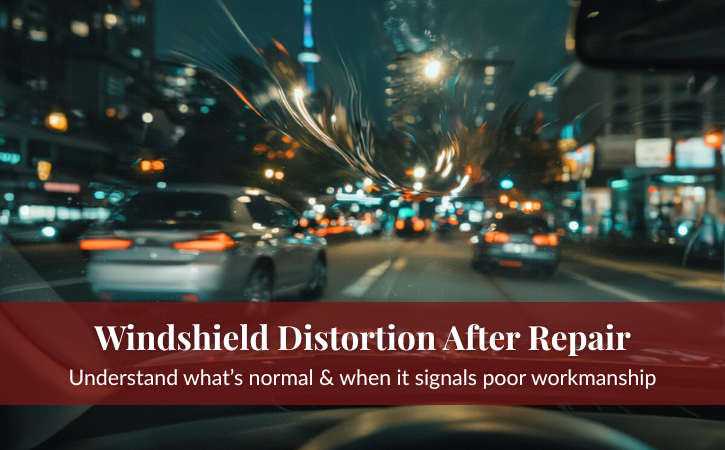
Windshield damage is always inconvenient, but the real frustration often begins after the repair — especially when drivers start noticing distortion in their field of vision. Many vehicle owners in Toronto report seeing faint waves, bends, ripples, or slightly blurred sections after a chip or crack has been repaired. The important question is: how much distortion is acceptable, and when does it signal poor workmanship?
This guide provides a clear, practical explanation to help car owners understand what’s normal, what isn’t, and how to ensure they receive a high-quality windshield repair in Toronto.
Why Does Windshield Distortion Happens After Repair?
Windshields are manufactured as laminated safety glass, designed to maintain structural integrity and optical clarity. When a chip or crack is repaired, a technician injects resin to restore strength and prevent the damage from spreading.
Distortion appears when:
- The resin does not match the optical index of the surrounding glass
- The damaged area was not cleaned or dried correctly before injection
- UV curing was uneven
- An incorrect grade of resin was used
- The break was too large or complex to restore perfect clarity
Some distortion is unavoidable because the glass has already been damaged. However, significant or noticeable distortion often points to issues in the repair process.
What Counts as Normal Distortion?
A high-quality repair may still leave minor visual changes, but they should be subtle and should not interfere with safe driving. Normal post-repair distortion includes:
1. Slight Blurring Directly Over the Original Chip
If you look closely and from certain angles, you may see a faint shadow or soft blur where the damage once was. This is normal, especially for star-breaks or long cracks.
2. Micro-Reflections in Bright Sunlight
On exceptionally bright days in Toronto, repaired spots may reflect a little differently when sunlight hits the glass. This does not compromise visibility.
3. Very Small “Ripple” Effect When Viewed From Close Up
When your eyes are only a few inches away from the repair, a slight ripple may appear. From the driver’s normal seated position, this should not be noticeable.
These normal effects do not affect safety or clarity while driving.
Signs of Poor Workmanship: Distortion You Should Not Ignore
If the distortion is visible from your normal driving position, or if it affects how you interpret the road ahead, that’s a red flag. Poor-quality windshield repairs can compromise both safety and comfort.
Below are the key indicators that point to a substandard repair:
1. Visible Waviness Extending Beyond the Repair Area
If the glass looks uneven or slightly bent around the repair, it may indicate:
- Incorrect resin pressure
- Improper vacuum cycles
- Uneven curing
This type of distortion can cause eye strain during longer drives.
2. Noticeable Double Vision or “Ghosting”
If headlights, lane markings, or objects appear doubled, the repair was not completed with proper optical alignment. This is considered a safety issue, not a cosmetic one.
3. Cloudiness or Haze
A cloudy appearance suggests:
- Moisture trapped in the break
- Contaminated resin
- Insufficient curing time
This should not happen with a professional repair.
4. Distortion Visible in Night Driving
If you notice halos, streaks, or bending of lights at night, the optical clarity has been compromised. Toronto’s winter evenings can make this effect even more noticeable.
5. Resin Spread or Uneven Surface
A proper repair should be smooth. Any bumps, rough edges, or surface inconsistencies indicate poor finishing.
When a Windshield Should Be Repaired vs. Replaced
Sometimes distortion appears simply because the damage was too severe to restore perfect clarity. Cracks that are:
- longer than 6 inches
- directly in the driver’s line of sight
- branching in multiple directions
- containing crushed glass
- on the inner laminate layer
…usually require a full windshield replacement instead of a repair.
A reputable auto glass service will recommend replacement when repairs cannot guarantee safe visibility.
How Advantage Auto Glass Toronto Ensures Clarity and Safety?
Toronto drivers trust Advantage Auto Glass Toronto because of our strict repair standards and our focus on optical quality — not just structural strength.
Our process includes:
- Industry-graded OEM-approved resin matched to optical clarity
- Controlled curing systems to prevent uneven hardening
- Precision vacuum and pressure cycles to remove air and moisture
- Quality inspections under multiple lighting conditions
- Expert technicians trained for complex break patterns
The result: repairs that minimise distortion and maintain the visibility you rely on every day.
What to Do if You’re Experiencing Distortion After a Repair?
If distortion is affecting your visibility or you’re unsure whether your previous repair was done correctly, it’s best to have it professionally inspected.
Drivers in Toronto, North York, Etobicoke, Scarborough, and nearby areas can bring their vehicle to Advantage Auto Glass Toronto for an assessment and expert windshield repair in Toronto. Our team will determine whether the repair is acceptable or if corrective work is needed.
For questions or to book an appointment, call (416) 740-7779 — our specialists are here to help ensure your windshield is safe, clear, and performing as it should.
Recent Posts
Related Posts
A Porsche windshield is more than glass. From acoustic glazing to forward-facing cameras, the right replacement depends on your exact model and options. Here's what Porsche owners in Toronto should know about repair, replacement, and camera calibration before approving any work on their car.
A chipped or cracked Subaru windshield isn't always a full replacement, and on EyeSight-equipped models the glass ties into driver-assistance cameras. Here's how to tell repair from replacement, why calibration can matter, and what Subaru owners across Toronto and the GTA should check before booking.