


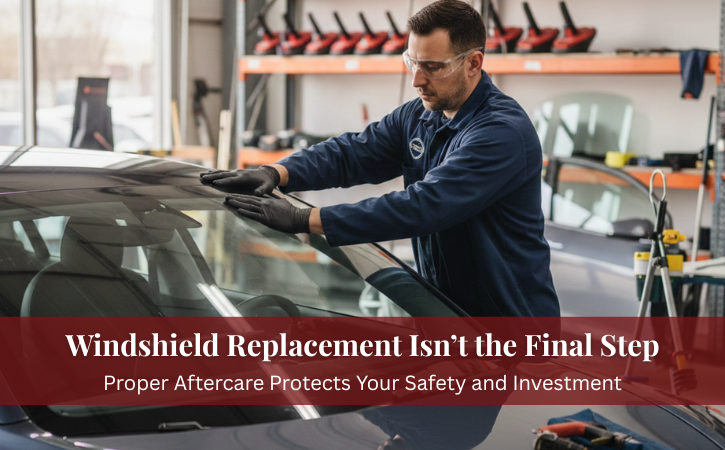
There is a specific kind of relief that comes with finally fixing a cracked windshield. The view is clear, the safety risk is gone, and your car looks new again.
But whether you visited our shop or used our mobile windshield replacement service, the job isn’t technically finished the moment the technician drives away. The adhesive (urethane) that bonds the glass to your vehicle’s frame needs time to cure and harden.
At Advantage Auto Glass Toronto, we’ve seen it all over our 20+ years in the industry. We know that the first 48 hours are critical for ensuring the glass sets correctly, stays leak-free, and keeps you safe.
To help you protect your investment, here is the essential aftercare guide every Toronto driver needs to know.
1. Trust the “Retention Tape” (And Leave It Alone)
You’ll notice strips of blue or orange tape holding your new windshield to the car frame. It might look a little unsightly, but it serves a vital purpose: it prevents the glass from shifting while the adhesive dries. Leave this tape on for at least 24 hours. Removing it too early can cause the seal to slip, leading to wind noise or water leaks later on. Do not drive it without the tape during that first day.
2. Go Easy on the Door Slamming
This is simple physics, but it’s easy to forget. When you slam a car door, you create a sudden spike in cabin air pressure. On a fully cured windshield, this is fine. On a freshly installed one? That burst of pressure pushes outward against the glass.
Since the glue is still setting, that pressure can pop the seal, creating invisible holes where water will eventually get in. Close your doors gently for the first couple of days.
3. Crack a Window to Equalize Pressure
To help with the issue mentioned above (air pressure), keep one of your side windows cracked open about an inch for the first 24 hours.
This prevents a vacuum effect inside the cabin. If the air pressure inside the car builds up (from heat or closing doors), the open window gives that air an escape route that isn’t pushing against your new windshield.
4. Avoid the High-Pressure Car Wash
We know how quickly cars get dirty here—whether it’s construction dust in the summer or salt spray in the winter. However, you must avoid automated high-pressure car washes for at least 48 to 72 hours. Because the high-pressure jets can shift the glass or damage the curing seal. Some harsh soaps used in automated washes can degrade the fresh urethane.
Tip: If you absolutely must clean the car, a gentle hand wash with a low-pressure garden hose is safe after 24 hours.
5. Be Mindful of Toronto’s Potholes
Driving in the GTA means dodging potholes and navigating streetcar tracks. For the first day or two after your auto glass replacement in Toronto, try to stick to smoother routes if possible.
Excessive vibration and jarring impacts can disturb the bond before it has fully hardened. If you can’t avoid the bumps on the Gardiner or DVP, just take them slower than usual.
6. Replace Your Wiper Blades
If you had a cracked windshield for a while, the jagged glass likely created tiny cuts or rough spots on your wiper blades. If you use those old wipers on your brand-new glass, you risk scratching the pristine surface immediately.
Avoid the windshield replacement cost in Toronto by swapping in a fresh pair of wipers. It’s a small expense that keeps the new glass scratch-free and ensures better visibility during our rainy seasons.
7. Keep the Dashboard Clutter-Free
Many of us use the dashboard as a shelf for parking permits, transponders, or sunshades. For the first 48 hours, keep the dashboard completely clear.
You want to avoid pushing anything up against the base of the windshield on the interior side. Even a sunshade propped up against the glass can exert enough localized pressure to warp the seal while it’s still tacky.
8. Don’t Ignore ADAS Recalibration
If you drive a modern vehicle (typically 2016 or newer), your windshield likely houses cameras for Lane Departure Warning, Emergency Braking, or Rain Sensors.
When the glass is replaced, these cameras are moved. Even a millimeter of difference throws off the system. If your dashboard lights are on, or if the features act glitchy, the camera needs calibration.
As an insurance-approved shop, we ensure this is handled so your safety systems work exactly as the manufacturer intended.
9. Watch Where You Park (Weather Matters)
The curing process relies on temperature and humidity.
- In Summer: Try to park in the shade. Extreme heat can cause air bubbles to expand in the seal.
- In Winter: If possible, park in a garage. Keeping the vehicle closer to room temperature helps the urethane cure evenly, rather than freezing before it bonds.
10. Listen for “Wind Whistles”
Once you are back on the highway (like the 401 or 400), turn down the radio and listen. You shouldn’t hear a whistling sound coming from the glass.
If you hear air hissing, it means there is a gap in the seal. Because we pride ourselves on over 400 top-rated reviews, we stand by our work. If you hear anything unusual, bring it back immediately so we can reseal it before it becomes a larger issue.
Protect Your Investment with the Pros
A windshield isn’t just a window; it’s a structural safety component of your vehicle. Proper aftercare ensures that the installation lasts for the life of your car.
If you have questions about your recent service, or if you’re driving around with a crack and are ready to get it fixed by a team with over 20 years of hands-on experience, we are here to help. We handle the insurance paperwork for you, so you can get back to your life hassle-free.
Need advice or a quote? Call Advantage Auto Glass Toronto today at (416) 740-7779 or request an online quote.
Recent Posts
Related Posts
A Porsche windshield is more than glass. From acoustic glazing to forward-facing cameras, the right replacement depends on your exact model and options. Here's what Porsche owners in Toronto should know about repair, replacement, and camera calibration before approving any work on their car.
A chipped or cracked Subaru windshield isn't always a full replacement, and on EyeSight-equipped models the glass ties into driver-assistance cameras. Here's how to tell repair from replacement, why calibration can matter, and what Subaru owners across Toronto and the GTA should check before booking.