


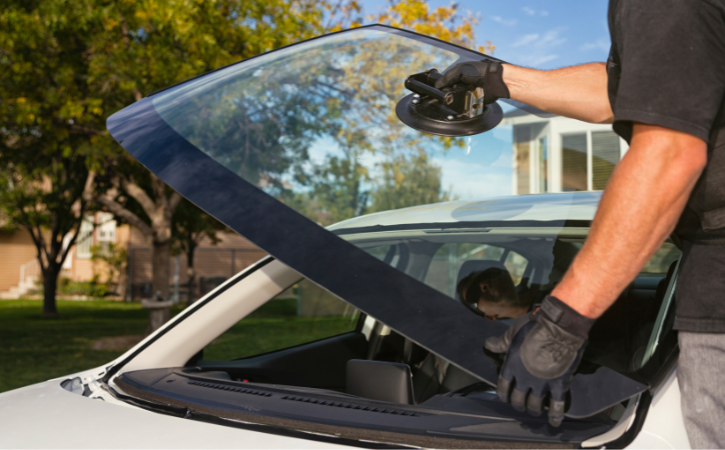
A chip or crack raises one immediate question: can this be fixed, or does the whole windshield need to come out? The answer isn’t about size alone. Several factors work together, and understanding them helps you make a confident decision instead of guessing.
What We Actually Look At First
There’s no single measurement that tells us whether a windshield can be repaired. Instead, we look at several factors together to understand how the damage affects the glass:
- How deep the damage goes, not just how wide it looks
- Where it sits, especially near the edges
- Whether it’s a single chip, a spreading crack, or multiple points of damage
- Whether it crosses your direct line of sight
- Whether it’s near or over a driver assistance camera or sensor
Two similar-looking chips can need completely different solutions. That’s why an in-person look matters more than a measurement.
Common Types of Damage and What They Usually Mean
- Rock chips: Small, isolated impacts, often repairable if caught early
- Bullseye chips: A circular chip with a dark center, typically repairable if not near the edge.
- Star breaks: Small cracks radiating from a central point, repairable depending on depth and location.
- Combination breaks: A mix of chip and cracking patterns, often needing closer inspection
- Long cracks: Generally point toward replacement, especially past several inches
- Edge cracks: Damage reaching the edge, which usually means replacement
- Multiple chips: Several impacts close together, which can weaken the glass even if each looks minor.
Real-world damage rarely fits neatly into one category. A rock chip can develop a radiating crack overnight, or a star break can sit close enough to the edge to behave like edge damage. If yours doesn’t match these examples exactly, that’s normal. It’s the combination of factors that matters, not the label.
When Is Windshield Repair or Replacement the Right Choice?
Here’s a quick way to see how the same factors point in different directions, depending on what’s actually going on with your windshield.
| Factor | Repair Is Usually Possible | Replacement Is Usually Recommended |
|---|---|---|
| Damage Size | Small chip or short crack that hasn’t spread | Long or continuously spreading crack |
| Location | A few inches from the edge | At the edge of the windshield |
| Line of Sight | Outside your direct view as the driver | Directly in the driver’s line of sight |
| Depth | Affects only the outer layer of the glass | Reaches the inner structural layer |
| Number of Impact Points | Single chip or crack | Multiple chips or cracks close together |
| ADAS Camera Area | Away from cameras or sensors | Overlaps the camera or sensor viewing area |
These factors rarely work in isolation. Repair is the right call when most of them line up in your favour. Replacement becomes necessary once even one or two point the other way, since those are the conditions that affect the windshield’s structural role, not just its appearance.
A Quick Self-Check Before You Call
A few things you can check yourself:
- Has the damage changed shape or length since you first noticed it
- Does your wiper catch or skip over the spot
- Does it blur or distort when you look through it at a straight line, like a lamp post or building edge
None of these confirm a diagnosis, but a yes to any is a sign the damage has moved past “wait and see.”
What Happens During a Professional Inspection
An inspection looks at the damage as a whole rather than any single detail. We assess depth, position, spread, and ADAS camera overlap together, since it’s the combination that determines the outcome. Windshield repair is recommended whenever it can safely restore strength and clarity. Full windshield replacement is only recommended once that’s no longer reliably the case. This is why the answer can differ from what a quick look at home suggests.
Is It Safe to Keep Driving Right Now?
This is usually the real question underneath everything else. In Ontario, the Highway Traffic Act requires an unobstructed view through the windshield, so damage in your line of sight can create a legal and safety concern, regardless of how small it looks.
There’s also a structural piece most drivers don’t know: your windshield is bonded to the frame and helps support the roof in a rollover, and in many vehicles the passenger airbag deploys upward off the windshield to reach the correct angle. A minor-looking crack can still affect both.
Why Acting Early Matters?
Windshield damage rarely stays the same. Moisture works into a chip, temperature swings stress the glass, and road vibration adds pressure. In Toronto and across the GTA, highway stone chips, freeze-thaw cycles, and construction zone jolts can turn a small, repairable chip into a crack requiring replacement within days. Once damage spreads past a certain point, repair is no longer on the table, and acting early keeps that choice in your hands.
What About Insurance?
Coverage varies by policy and provider. Some cover repair with no deductible, treating it as a low-cost way to avoid a bigger claim later, while others handle replacement differently by coverage tier. Checking your policy early puts you in a better position to decide.
What Should You Do Next?
- If the damage is small and unchanged, book an inspection soon, since repair may still be possible
- If it’s spreading, reaches the edge, or affects your visibility, don’t delay
- If you’re unsure, don’t guess. A professional inspection is the safest way to know your options
Your Next Step
Understanding repair versus replacement isn’t about diagnosing your own windshield. It’s knowing what to expect and what to ask when you have it looked at. If there’s still a chance yours can be safely repaired instead of replaced, having it inspected sooner gives you the best chance to preserve that option. With over 20 years serving drivers across Toronto and the GTA and more than 400 verified customer reviews, Advantage Auto Glass Toronto gives you a clear, honest answer, often with same day service. Call us at (416) 740-7779 to book your inspection. We’ll let you know honestly whether a repair is still possible or whether replacement is the safer option.
Recent Posts
Related Posts
A Porsche windshield is more than glass. From acoustic glazing to forward-facing cameras, the right replacement depends on your exact model and options. Here's what Porsche owners in Toronto should know about repair, replacement, and camera calibration before approving any work on their car.
A chipped or cracked Subaru windshield isn't always a full replacement, and on EyeSight-equipped models the glass ties into driver-assistance cameras. Here's how to tell repair from replacement, why calibration can matter, and what Subaru owners across Toronto and the GTA should check before booking.